How to Upload an Image as a Display in Your Website
Mar 04, 2022
Linas L.
6min Read
How to Insert an Epitome or a Logo in Your Website With HTML
When creating websites using an like shooting fish in a barrel-to-employ CMS like WordPress, there might be limitations to where you tin add together images.
Download Complete HTML crook canvass
This tin can be frustrating every bit it might be necessary to insert more than but a background paradigm on a web page. For case, i might wish to add together a website logo to the header and footer.
I solution is to add images into the site's theme HTML file. While inserting images on a website using HTML does crave some basic HTML cognition, beginners can still follow along equally it's not a complicated process.
This commodity will show how to insert an paradigm in HTML into your website without hassle. We will exist breaking the tutorial down into six steps with detailed explanations and easy-to-follow procedures.
6 Simple Steps to Insert an Image or a Logo in HTML
At that place are 3 ways to upload and insert images in an HTML document: via an FTP client like FileZilla, via hPanel's file managing director, and through the WordPress dashboard. For this tutorial, we will be using the 2nd pick.
We will too break downwardly the paradigm HTML code and explain the attributes needed to insert an image on your site. All of the HTML tags and syntax mentioned below are included in our HTML Crook Sail as well.
1. Upload the Image File
For this step, we will be uploading an prototype file into a WordPress website'southward public_html directory via Hostinger's file manager. However, this tutorial tin still exist implemented through any command panel and type of website.
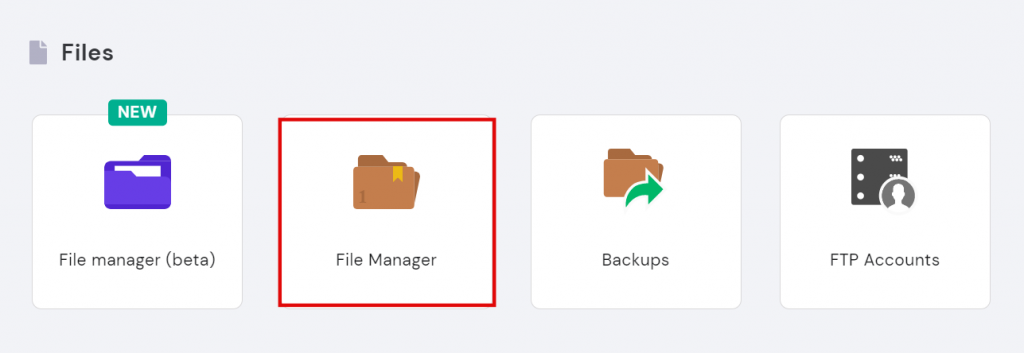
- Access your hPanel, navigate to the Files section and click on File Manager.
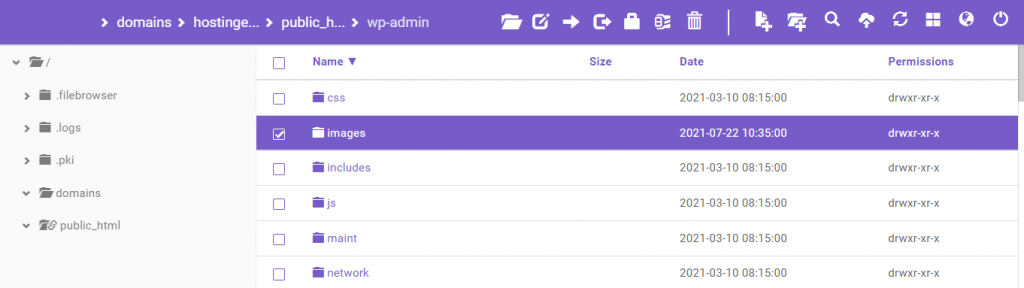
- Open the public_html directory, double-click the wp-admin – images folder.
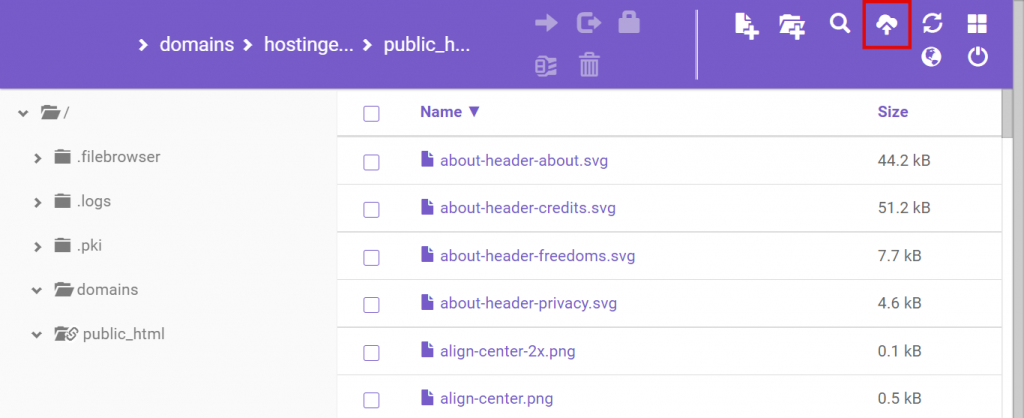
- Click on the Upload Files push at the acme-right corner of the bill of fare bar.
- Select the image files yous want to upload. Ensure that the file names are like shooting fish in a barrel to read and descriptive, as they will exist the championship aspect of the HTML images. Plus, remember to add dashes to separate the words.
Articulate image file names as well help search engines understand their content, improving the site's SEO.
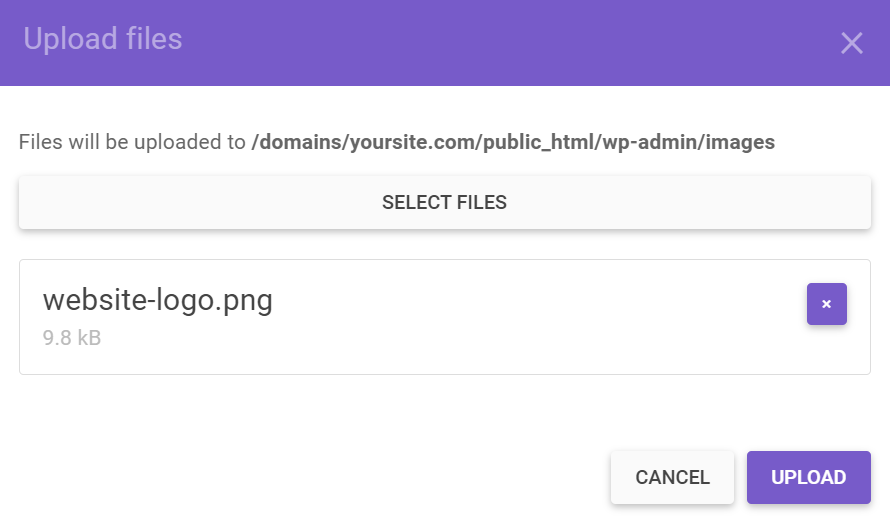
- Printing UPLOAD and expect until the process is finished.
Another way is to upload images through the WordPress dashboard. Here's how:
- On the WordPress dashboard, navigate to Media – Add together New.
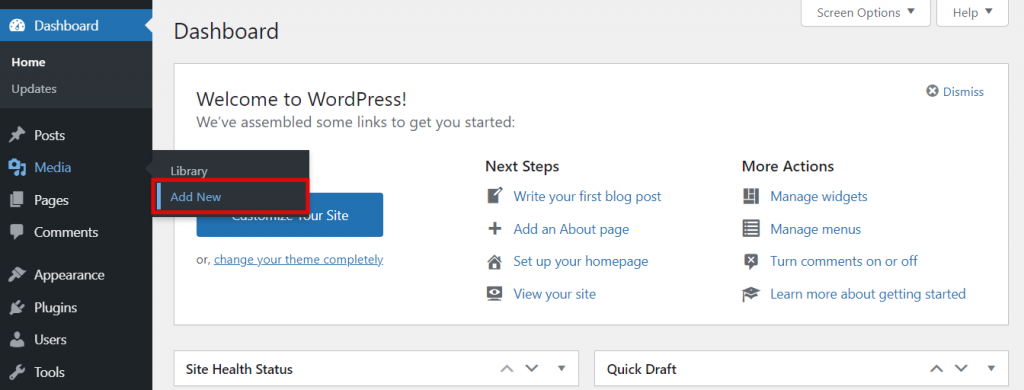
- Select the images you desire to add and await for them to end uploading.
When it comes to the best formats for images, in that location are 2 categories to choose from, raster and vector. JPEG/JPG, PNG, and GIF are some examples of raster image file formats, while vectors include PDF, SVG, and EPS.
two. Access the Theme Folder
Pro Tip
Since we'll be editing an HTML document, download a backup of your site earlier making whatsoever changes. This ensures that no data is lost if, by any adventure, an fault occurs during the process.
For this step, first access the WordPress theme editor and the HTML file where you want to insert images:
- From the WordPress dashboard, become to Appearance – Theme Editor.
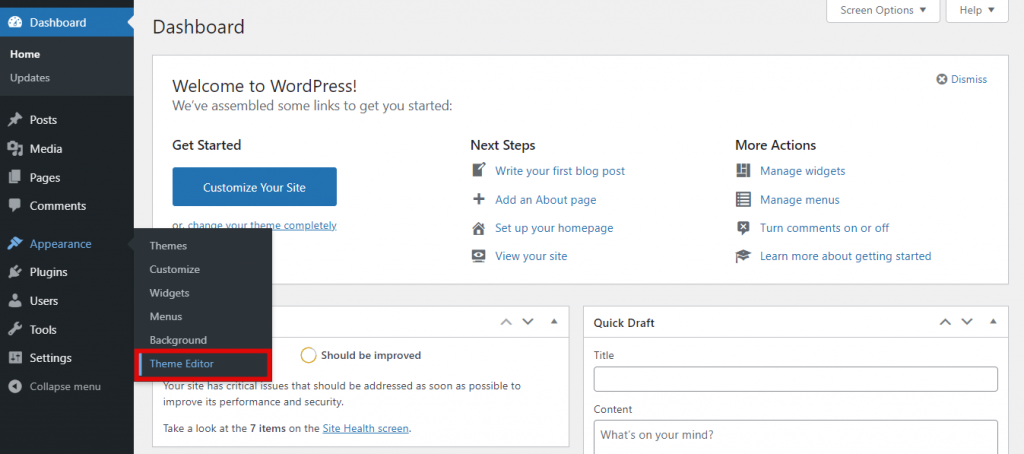
- Select the theme your site is using – for instance, Twenty-Twenty.
- Scroll through the Theme Files section and click on the HTML file yous want to add together an image to. For example, if y'all desire to add a logo to the header, click the header.php file.
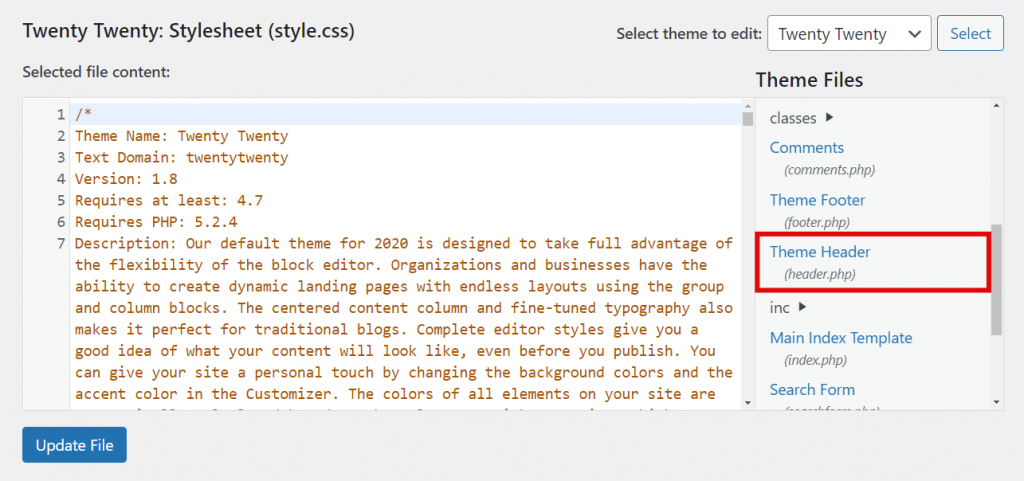
- Discover the line where the torso HTML tag or
<body>starts. Nether the first<div>tag, insert the image tag:<img>.
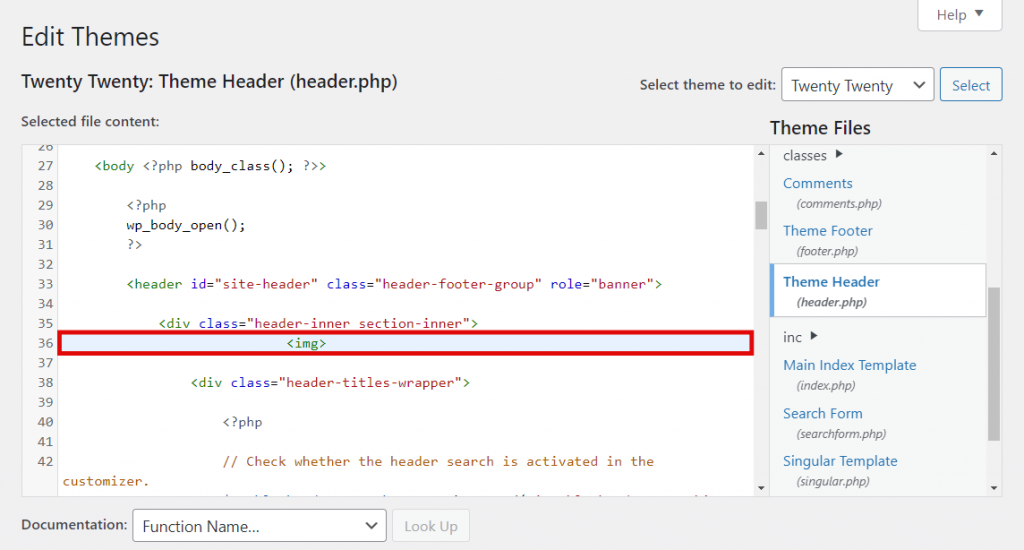
The paradigm tag is what embeds images into HTML files. It's an empty tag that includes HTML attributes such as img src and alt and doesn't require a closing tag.
Now, nosotros'll break downward the other HTML elements required later on the img tag.
3. Add the img src Attribute to the Image
Short for epitome source, img src is a must-accept HTML aspect of an image element as it determines the file path of the image in HTML. If the img src is non specified correctly, the image will non load.
At that place are ii means to write an img src attribute, using a relative or absolute path. In the relative path option, the epitome source is based on the image's current directory or folder.
This option is used when the image is uploaded to the same directory as the HTML file you desire to edit.
A relative path syntax looks like so:
img src="images/file-name.jpg"
On the other hand, the accented path specifies the image URL as its source. Use this path when the images are uploaded via WordPress Media or located in a different folder as the HTML file you're editing.
An accented path syntax has the following construction:
img src="your website'due south URL/folder-name/image-file-name.jpg"
For this tutorial, we'll exist using the accented path. In this instance, the instance img src for the image we uploaded in the images folder would expect like this:
img src="https://yoursite.com/wp-admin/images/website-logo.png"
If uploading the paradigm through WordPress media, follow these instructions to find the image source:
- From the WordPress dashboard, navigate to Media – Library.
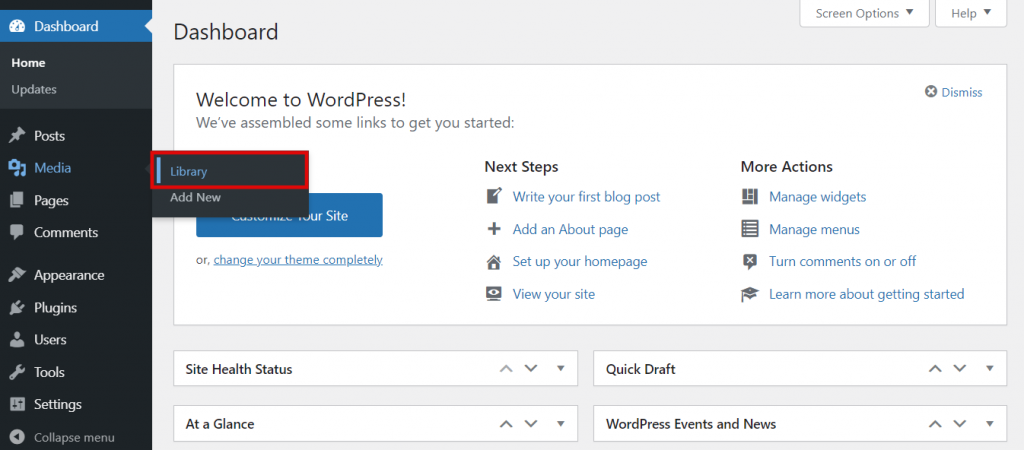
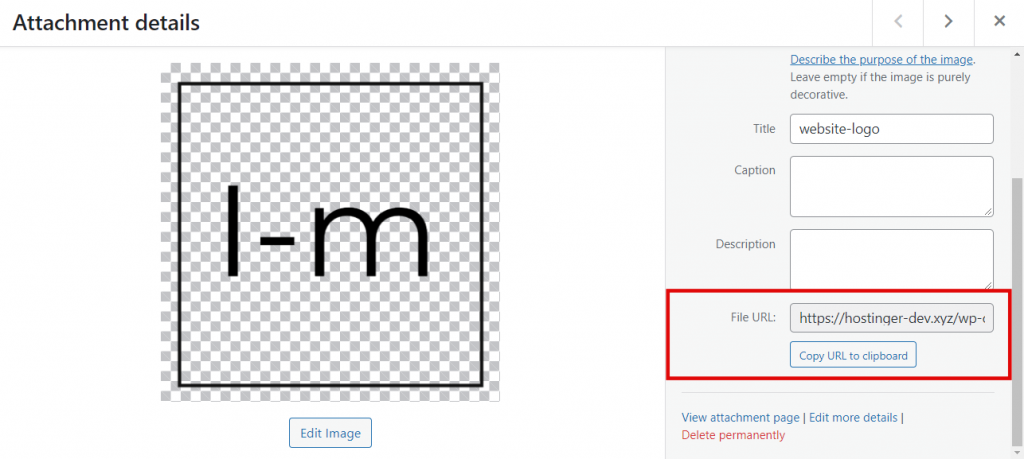
- Click on the image you're planning to add, then curl the sidebar until you notice the File URL field.
- Press the Copy URL to Clipboard push and just paste it as the image source.
4. Fix Width and Height
The width and height attributes specify the size of the image, usually in pixels. It's essential to ever set the image'due south width and height. They determine how much space is needed for the image when the browser loads the spider web page.
If they are non set, the browser won't be able to make up one's mind the paradigm size and will employ its original measurements. This tin can change the layout of the web folio and cause errors when the browser loads the prototype.
Below is the syntax for the width attribute with an example measurement:
img width="50px"
While the length attribute syntax looks like so:
img length="50px"
Change 50px to the desired size, depending on where you're planning to put the paradigm and the blueprint of the web page.
five. Add an Alt Attribute
The HTML alt attribute lets you lot add alternative text or information to the epitome. A descriptive text is essential when the image fails to load due to an error or tedious connection. It also helps screen-readers explain the image to visually impaired visitors.
Other than that, alt text allows search engines to empathise what the prototype is most during the itch process. Information technology increases the chance of the images appearing in paradigm search results and helps your spider web page rank better.
Recollect to be specific when describing the image and provide context to it. It's besides important to insert target keywords if possible.
An alt attribute syntax looks similar this:
img alt="insert text hither"
vi. Salvage Changes
Once you have input all the essential attributes and information to the HTML file, the image code will await something similar this:
img src="https://yoursite.com/wp-admin/images/website-logo.png" height="50px" width="50px" alt="site's logo"
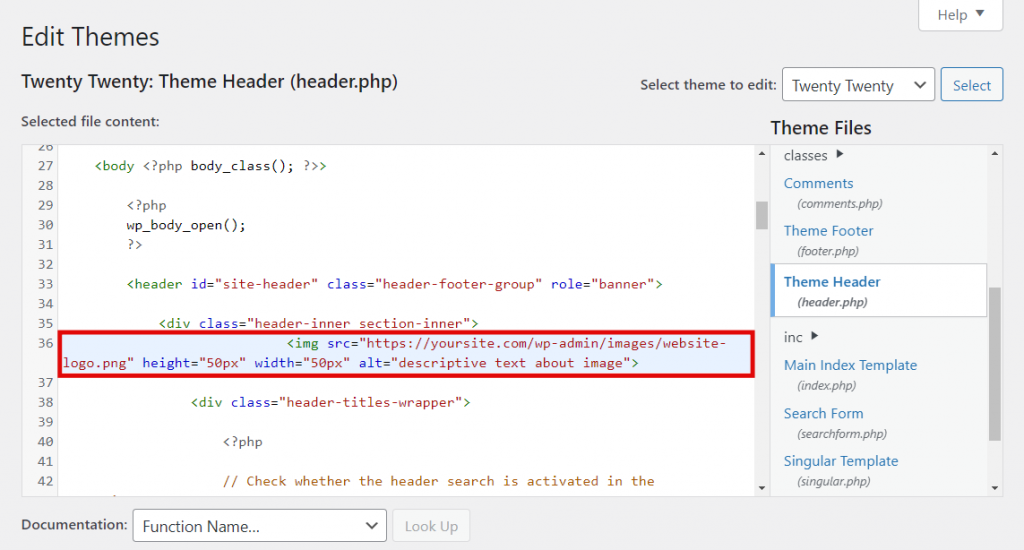
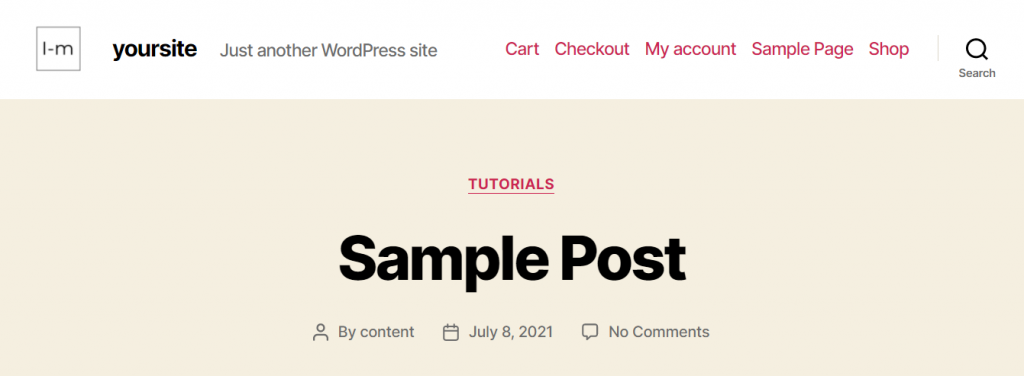
Bank check the code once more than before clicking the Update File button to save the changes. Then, reload the website to encounter if the changes are successful.
Bonus Step: Add a Link to the Prototype
When uploading original photos and images to your website, information technology'due south important to add custom URLs or links to them. Yous don't want other websites to take and employ the images without permission, credit, or backlinks.
If you haven't implemented measures to end people from hotlinking your images yet, it's possible to track the embedded files through the image URL. Paste the URL on Google Image Search, and information technology will display a listing of sites using that same image.
Only wrap the ballast chemical element on the paradigm lawmaking if yous desire to link an paradigm in HTML. An anchor is a text that marks the start and the end of a hypertext link. It includes the opening tag a and the endmost tag /a.
An image code with an anchor tag syntax will look similar so:
a href="world wide web.yourwebsite.com/image-name.html"img src="file-proper noun.jpg" peak="50px" width="50px" alt="about image"/a
However, if you upload images via WordPress Media, in that location's no need to create a custom URL. An paradigm URL is automatically generated when the file is uploaded.
Conclusion
When customizing a website, yous might encounter some limitations when adding images to a page. Content direction systems and website themes usually provide fixed options for inserting images, which might not arrange everyone's needs.
To get effectually that, it's necessary to add images using HTML. In this article, you've learned how to insert an image in HTML by post-obit six steps. Here's a recap:
- Upload the image file to a binder in the site'south public_html directory via the file managing director provided by the web host or WordPress Media.
- Access the HTML file where you want to insert the epitome, and add together the img tag.
- Include the img src attribute to define the source of the image.
- Add together the width and height attributes to define how the browser should display the image.
- Insert the alt aspect to describe the image.
- Save the changes.
Calculation a custom image URL for the files may besides be necessary. All the same, links are already automatically generated for WordPress media images.
Go and give the methods described in this tutorial a attempt and, if you accept further questions, leave them in the annotate section beneath.

Linas started as a customer success agent and is at present a full-stack spider web developer and Technical Squad Lead at Hostinger. He is passionate about presenting people with top-notch technical solutions, just equally much as he enjoys coding, he secretly dreams of becoming a rock star.
Source: https://www.hostinger.com/tutorials/website/how-to-add-image-or-logo-to-your-website
0 Response to "How to Upload an Image as a Display in Your Website"
Post a Comment